
Publications
Featured Publication
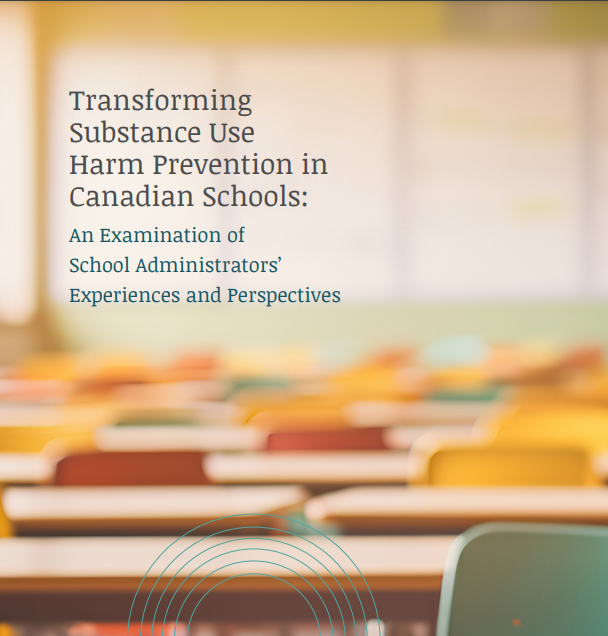
Transforming Substance Use Harm Prevention in Canadian Schools: An Examination of School Administrators’ Experiences and Perspectives, presents findings from a recent survey of Canadian kindergarten to 12th grade school administrators conducted as part of Wellstream’s Transforming Substance Use Harm Prevention in Schools initiative. The survey aimed to characterize current practices and identify needs related to substance use education and intervention in schools.
Transforming Substance Use Harm Prevention in Canadian Schools: An Examination of School Administrators’ Experiences and Perspectives, presents findings from a recent survey of Canadian kindergarten to 12th grade school administrators conducted as part of Wellstream’s Transforming Substance Use Harm Prevention in Schools initiative. The survey aimed to characterize current practices and identify needs related to substance use education and intervention in schools.
Explore Publications
Browse publications by topic, search with keywords, or filter by methods


School-Based Substance Use Interventions: An Overview of Systematic Reviews and Meta-analysis
Schools offer a strategic setting for substance use prevention; however, program effectiveness remains uncertain. The objective of this study was to evaluate the efficacy of school-based approaches to preventing and reducing substance use for children and adolescents, while incorporating school ecosystem considerations.
International Journal of Mental Health and Addiction
2026/01
Tags: Mental health, Substance use, YouthMethods: Review


From Small Ripples to a Sea Change: Elucidating Long-Term and Multi-Level Youth Mental Health Intervention Impacts Using Ripple Effects Mapping
The present study applied an adapted REM approach to capture systems and community change associated with the Agenda Gap program. Using transcript and mind map data generated through an REM process with former Agenda Gap youth collaborators and adult allies, reflexive thematic analysis supported the construction of three thematic program outcomes: (1) Reimagining Future Possibilities, (2) Systems Integration: Transforming School Practices, and (3) Progressing From Ripple Effects to Sea Change.
Qualitative Health Research
2025/12
Methods: Qualitative
Addressing student substance use in Canadian schools: an exploration of administrators’ perspectives
To support the development of evidence-informed guidance for Canadian Kindergarten through Grade 12 (K-12) school administrators, this study examined their perceptions of the scope of student substance use and the challenges they face in responding within school settings.
Health Promotion International
2025/10
Tags: Policy, Substance use, YouthMethods: Mixed-methodsTaking stock of youth substance use portrayals: A critical content analysis of Canadian news media, 2016-2024.
A mixed-methods critical content and discourse analysis exploring the characteristics and consequences of youth substance use as portrayed in Canadian news media.
Social Science & Medicine
2025/08
Tags: Public health, Substance use, YouthMethods: Mixed-methodsContributors to positive mental health among youth: a qualitative study in British Columbia, Canada
This study sought to explore youth’s perspectives and beliefs about mental health from a strengths-based perspective, including identifying factors which enable them to feel supported.
Health Promotion International
2025/08
Methods: Qualitative

Youth and young adult cannabis research – Critical approaches to advancing the field
This special section of the International Journal of Drug Policy brings together empirical and conceptual contributions to youth cannabis research through diverse methodological and critical social science approaches.
International Journal of Drug Policy
2025/04
Methods: Other

Models and key elements of integrated perinatal mental health care
This study consists of a scoping review to identify and synthesize evidence on existing models and key elements of integrated PMH, with data extracted according to PRISMA guidelines.
PLoS Mental Health
2025/03
Methods: Review
COVID-19-related stress and positive coping strategies among young adults in Canada and France: A latent class analysis
This study uses data collected from a large and diverse sample of young adults from Canada and France during the second year of the COVID-19 pandemic to respond to the following objectives: 1) identify sub-groups of young adults with a similar coping pattern using latent class analysis; 2) examine whether these coping sub-groups differ by sociodemographic characteristics; and 3) examine the association of sub-group membership and mental health-related outcomes, controlling for sociodemographic characteristics.
PLOS Mental Health
2025/02
Tags: Mental health, YouthMethods: QuantitativeComfort in Providing Care and Associations With AttitudesTowards Substance Use: A Survey of Mental Health Clinicians at an Urban Hospital in Vancouver, Canada
Stigma is a major driver of harms associated with substance use and can interfere with the provision of high-quality, effective healthcare for people who use drugs. Our study aimed to explore the relationship between mental health clini-cians' comfort in providing substance use care and their attitudes towards substance use.
Journal of Psychiatric and Mental Health Nursing
2025/02
Methods: QuantitativeHelping men build better intimate partner relationships: Canadian provider perspectives.
The aim of this study was to describe the strategies used by Canadian healthcare providers to assist men in strengthening their intimate partner relationships.
Health Education Journal
2025/01
Methods: QualitativeEvidence gap: Data from clinical contexts needed to better support youth experiencing the mental health impacts of climate change.
Despite growing population-level data about the negative mental health consequences of climate change on youth, there is limited data from clinical contexts.
Journal of Environmental Psychology
2024/11
Methods: Other2S/LGBTQ+ youth substance use and pathways to homelessness: A photovoice study.
Supports for 2S/LGBTQ+ youth, who use drugs in the lead-up to and after becoming homeless, should be informed by youths' pursuits of becoming and belonging in the context of marginalization. This community-based photovoice study describes the narratives used by 2S/LGBTQ+ youth about how substance use featured in their pathways to homelessness
International Journal of Drug Policy
2024/10
Tags: 2SLGBTQIA health, Homelessness, Photovoice, Sexual and gender minorities, Social determinants of health, YouthMethods: QualitativeExploring How Youth Use TikTok for Mental Health Information in British Columbia: Semistructured Interview Study With Youth.
One of the first studies to explore the experiences of youth with TikTok, specifically their experiences accessing mental health information on the platform, the findings provide important direction for future research.
JMIR Infodemiology
2024/07
Tags: Social media, YouthMethods: QualitativeIdentifying mechanisms of youth mental health promotion: A realist evaluation of the Agenda Gap programme.
This study presents a realist evaluation of Agenda Gap, drawing on realist qualitative interviews with youth participants (n = 18) and adult collaborators (n = 4). The analysis used the middle-range theories of ‘Third Space’ and ‘Third Place’ to conceptualize how causal mechanisms were produced from the non-familial youth-adult relationships that are foundational to the programme.
PLoS Mental Health
2024/06
Tags: Evaluation, YouthMethods: QualitativeDeveloping consensus to enhance perinatal mental health through a model of integrated care: Delphi study
Perinatal mental illness is an important public health issue, with one in five birthing persons experiencing clinically significant symptoms of anxiety and/or depression during pregnancy or the postpartum period. The purpose of this study was to develop a consensus-based model of integrated perinatal mental health care to enhance service delivery and improve parent and family outcomes.
PLoS One
2024/05
Tags: Mental healthMethods: OtherIntersecting transitions among 2S/LGBTQ+ youth experiencing homelessness: A scoping review
Two-Spirit, lesbian, gay, bisexual, transgender, queer, and other sexual and gender minority (2S/LGBTQ+) youth under 30 years of age are inequitably impacted by homelessness. The objective of this study was to summarize the literature addressing health and social transitions among homeless 2S/LGBTQ+ youth.
Children and Youth Services Review
2024/01
Tags: 2SLGBTQIA health, Homelessness, Scoping review, Sexual and gender minorities, Social determinants of health, YouthMethods: ReviewOverlapping pandemic- and climate-related worry: Prevalence and association with mental health outcomes in a Canadian sample
This study examines the prevalence of overlapping pandemic- and climate-related worry and its association with mental health outcomes in a nationally representative sample in Canada. We also present data on the ways in which this worry is disproportionately impacting certain population groups.
Journal of Mental Health and Climate Change
2023/12
Tags: Climate change, InequitiesMethods: QuantitativeParent psychological distress and parent child relationships two years into the COVID-19 pandemic: Results from a Canadian cross-sectional study
Parents with children living at home were early on identified as a population at heightened mental health risk during the COVID-19 pandemic, with concerns about the potential long-term impacts of the pandemic on parents’ mental health, family functioning, and children’s well-being. This study investigates impacts of the pandemic on parents’ psychological distress, contextual sources of distress, and associations with family functioning nearly two years into the pandemic.
PLoS One
2023/09
Tags: Family, Mental health, Parents/caregiversMethods: QuantitativeFood-related worry and food bank use during the COVID-19 pandemic in Canada: Results from a nationally representative multi-round study
Early in the COVID-19 pandemic, nearly one in five adults in Canada worried about having enough food to meet their household's needs. This study builds upon data collected in the early months of the COVID-19 pandemic, confirming that persistently high proportions of adults living in Canada experienced stress or worry about having enough food to meet their household’s basic needs in 2020–2021.
BMC Public Health
2023/09
Methods: QuantitativeEngaging families and parent advocates in research on substance use and drug policy reform: Guiding principles from a Canadian community-academic partnership
Canada is in the midst of a public health emergency in drug poisoning (overdose) deaths. In this context parents, and especially mothers, of those who have died from drug poisoning have mobilised to advocate for urgent responses and drug policy reforms.
Drug and Alcohol Review
2023/08
Methods: OtherMental distress and virtual mental health resource use amid the COVID-19 pandemic: Findings from a cross-sectional study in Canada
This paper characterizes levels of mental distress among adults living in Canada amid the COVID-19 pandemic and examines the extent of virtual mental health resource use, including reasons for non-use, among adults with moderate to severe distress.
Digital Health
2023/05
Tags: Mental health care, Public healthMethods: QuantitativeAdvancing socioecological mental health promotion intervention: A mixed methods exploration of Phase 1 Agenda Gap findings
The aim of this paper is to contribute empirical evidence to guide innovation in youth mental health promotion, detailing the early outcomes of Agenda Gap, an intervention centering youth-led policy advocacy to influence positive mental health for individuals, families, communities and society.
Frontiers in Public Health
2023/02
Tags: YouthMethods: Mixed-methodsAutonomy and (In)Capacity to Consent in Adolescent Substance Use Treatment and Care
Our overarching aim with this commentary piece is to advance dialogue about how substance use care might be approached in ways that better foster adolescent self-determination and the kinds of trusting, supportive relationships with clinicians and caregivers that can be absolutely essential and lifesaving in the context of the toxic drug supply.
Journal of Adolescent Health
2023/02
Tags: Mental health care, Substance use, YouthMethods: OtherModeration of the association between COVID-19-related income loss and depression by receipt of financial support: Repeated cross-sectional surveys of young adults in Canada and France
To mitigate the adverse effects of the COVID-19 pandemic on financial resources, governments and family/friends mobilized financial support interventions (e.g., emergency aid funds) and assistance. This study aimed to investigate the moderating effect of financial support from the government or from family/friends on the association between income loss and depression among young adults.
SSM Population Health
2023/01
Methods: QuantitativeEmotional response patterns, mental health, and structural vulnerability during the COVID-19 pandemic in Canada: A latent class analysis
The COVID-19 pandemic has contributed to increases in negative emotions such as fear, worry, and loneliness, as well as changes in positive emotions, including calmness and hopefulness. This study examines how patterns of co-occurring positive and negative emotions relate to structural vulnerability and mental health amid the pandemic.
BMC Public Health
2022/12
Methods: QuantitativeMental health inequities amid the COVID-19 pandemic: Findings from three rounds of a cross-sectional monitoring survey of Canadian adults
Adverse mental health impacts of the COVID-19 pandemic are well documented; however, there remains limited data detailing trends in mental health at different points in time and across population sub-groups most impacted. This paper draws on data from three rounds of a nationally representative cross-sectional monitoring survey to characterize the mental health impacts of COVID-19 on adults living in Canada (N = 9,061).
International Journal of Public Health
2022/07
Tags: Inequities, Public healthMethods: QuantitativeYoung adults’ mental health and unmet service needs in the context of the COVID-19 pandemic across Canada and France
While young adults experienced mental health challenges during the COVID-19 pandemic, little is known about how their mental health needs were subsequently met through access to mental health services (MHS). From October to December 2020, we conducted an online survey of young adults (18–29 years) living in Canada and France to investigate factors associated with unmet MHS needs.
Community Mental Health Journal
2022/06
Tags: Inequities, Mental health care, YouthMethods: QuantitativeUsing photovoice to understand experiences of opioid use among sexual and gender minority youth
In Canada, sexual and gender minority youth use opioids at disproportionately high rates. Yet, little is known about the distinct contexts of opioid use within this group, challenging capacity to develop well founded policy and practice supports. This case study aims to examine – in depth – the experiences and contexts of opioid use among a sample of four sexual and gender minority youth in Vancouver, Canada.
Culture, Health & Sexuality
2022/05
Methods: QualitativeWidening mental health and substance use inequities among sexual and gender minority populations: Findings from a repeated cross-sectional monitoring survey during the COVID-19 pandemic
This paper examines the mental health and substance use impacts of the COVID-19 pandemic among sexual and gender minority (SGM) populations as compared to non-SGM populations, and identifies risk factors for mental health and substance use impacts among SGM groups.
Psychiatry Research
2021/12
Methods: QuantitativeCorrelates of suicidal ideation related to the COVID-19 pandemic: Repeated cross-sectional nationally representative Canadian data
With significant levels of mental distress reported by populations, globally, the magnitude of suicidal ideation during and beyond the COVID-19 pandemic is a central concern. The goal of this study was to quantify the extent of pandemic-related suicidal ideation in the Canadian population during the first ten months of the pandemic and identify sociodemographic and pandemic-related stressors associated with increased risk of ideation.
Population Health
2021/12
Tags: Public healthMethods: QuantitativeIncreases in alcohol and cannabis use associated with deteriorating mental health among LGBTQ2+ adults in the context of COVID-19: Findings from a repeated cross-sectional study in Canada
Lesbian, gay, bisexual, trans, other queer, and Two-Spirit (LGBTQ2+) people are particularly at risk for the psycho-social consequences of the COVID-19 pandemic, though population-tailored research within this context remains limited. This study examines the extent of, and associations between, increased alcohol and cannabis use and deteriorating mental health among LGBTQ2+ adults in Canada during the COVID-19 pandemic.
International Journal of Environmental Research and Public Health
2021/11
Methods: QuantitativeImpacts of the COVID-19 pandemic on family mental health in Canada: Findings from a multi-round cross-sectional study
We examined the mental health impacts of the coronavirus disease 2019 (COVID-19) pandemic among parents with children <18 years old living at home over three study rounds in May 2020 (n = 618), September 2020 (n = 804), and January 2021 (n = 602). Data were collected using a cross-sectional online survey of adults living in Canada, nationally representative by age, gender, household income, and region.
International Journal of Environmental Research and Public Health
2021/11
Tags: Family, Parents/caregiversMethods: QuantitativeCannabis Education Resources for Parents: An Environmental Scan and Critical Content Analysis in the Context of Legalization
Cannabis was recently legalized for adult use in Canada and many American states. In this context, there is a pressing need for educational resources - aimed at youth and their parents/caregivers - to reduce potential harm. However, little is known about the current state of such resources. This paper presents findings of an environmental scan, mapping and critically analyzing the present landscape of cannabis resources for parents/caregivers.
Drugs Education, Prevention and Policy
2021/11
Tags: Cannabis, Education, Parents/caregivers, Substance use, YouthMethods: Qualitative« I’m not your reality show »: Perspectives of bereaved mothers’ engagement with the news media to advance drug policy reform
North America's overdose crisis is one of the most urgent public health issues of our time and parents bereaved from substance use are a prominent voice within the news media. We used a narrative interview approach and thematic analysis to distill key themes in recounting bereaved mothers’ stories of engaging with reporters, their perspectives on media representation and the personal impacts of sharing their stories with news media.
Social Science and Medicine
2021/09
Tags: Parents/caregivers, Policy, Substance useMethods: Qualitative« It’s a bit of a double-edged sword »: Motivation and personal impact of bereaved mothers’ advocacy for drug policy reform
As the overdose crisis began to take hold across Canada in 2016, bereaved parents, mainly mothers, emerged as vocal advocates for drug policy reform and harm reduction, using their stories to challenge the stigma of drug-related death. In 2017, we launched a qualitative research partnership with leading family organizations in Canada, conducting interviews with 43 mothers whose children had died from substance use, to understand their experiences of drug policy advocacy.
Qualitative Health Research
2021/09
Tags: Parents/caregivers, Policy, Substance useMethods: QualitativeReddit users’ experiences of suicidal thoughts during the COVID-19 pandemic: A qualitative analysis of r/Covid19_support posts
The COVID-19 pandemic is having considerable impacts on population-level mental health, with research illustrating an increased prevalence in suicidal thoughts due to pandemic stressors. The objective of this study was to examine how Reddit users within the r/COVID19_support community describe their experiences of suicidal thoughts amid the COVID-19 pandemic.
Frontiers in Public Health
2021/08
Tags: Social mediaMethods: QualitativeExamining associations between food worry and mental health during the early months of the COVID-19 pandemic in Canada
Little is known about the association between mental health and diminished food worry during the COVID-19 pandemic. This paper examines worry about having enough food to meet household needs and its association with mental health during the early months of the pandemic in Canada.
Canadian Journal of Public Health
2021/08
Methods: QuantitativeLegal regulation as a human rights and public health approach to currently prohibited substances
The editors of this special section of the journal present a collection of 10 conceptual and empirical papers developed in response to an International Research Roundtable, held in June 2019, sponsored by the Peter Wall Institute for Advanced Studies.
International Journal of Drug Policy
2021/05
Tags: Policy, Public health, Substance useMethods: OtherExamining the impacts of the COVID-19 pandemic on family mental health in Canada
In the first wave of the COVID-19 pandemic, social isolation, school/child care closures and employment instability have created unprecedented conditions for families raising children at home. This study describes the mental health impacts of the COVID-19 pandemic on families with children in Canada.
BMJ Open
2021/01
Tags: Family, Parents/caregiversMethods: QuantitativeAssociations between periods of COVID-19 quarantine and mental health in Canada
Since the onset of the COVID-19 pandemic, many jurisdictions, including Canada, have made use of public health measures such as COVID-19 quarantine to reduce the transmission of the virus. To examine associations between these periods of quarantine and mental health, including suicidal ideation and deliberate self-harm, we examined data from a national survey of 3000 Canadian adults distributed between May 14-29, 2020.
Psychiatry Research
2021/01
Tags: COVID-19, Public healthMethods: QuantitativeInvoluntary stabilization care of youth who overdose: A call for evidence- and ethics-informed substance use policy
As is the case across Canada, the province of British Columbia is in the midst of an opioid overdose crisis. In response to the devastating impacts of this crisis on youth (under 19 years of age), the provincial government is considering amending the Mental Health Act to allow for involuntary, hospital-based stabilization care of youth following an overdose.
Canadian Journal of Public Health
2021/01
Tags: Mental health care, Substance use, YouthMethods: OtherA portrait of the early and differential mental health impacts of the COVID-19 pandemic in Canada: Findings from the first wave of a nationally representative cross-sectional survey
Evidence on the population-level mental health impacts of COVID-19 are beginning to amass; however, to date, there are significant gaps in our understandings of whose mental health is most impacted, how the pandemic is contributing to widening mental health inequities, and the coping strategies being used to sustain mental health. This monitoring study highlights the differential mental health impacts of the pandemic for those who experience health, social, and structural inequities.
Preventative Medicine
2021/01
Tags: Inequities, Public healthMethods: QuantitativeUse of asynchronous virtual mental health resources for COVID-19 related stress among the general population in Canada: Findings from a nationally representative cross-sectional survey
The aim of this paper is to examine the use of asynchronous virtual mental health resources in Canada during the COVID-19 pandemic among the general population and among a participant subgroup classified as experiencing an adverse mental health impact related to the pandemic.
International Journal of Drug Policy
2020/12
Tags: Public healthMethods: QuantitativeBereaved mothers’ engagement in drug policy reform: A multisite qualitative analysis
Globally, a tainted drug supply is claiming the lives of tens of thousands of people who use drugs and current measures are not quelling this crisis. Within this context, mothers who have lost a child to substance use have emerged as vocal advocates for drug policy changes. This paper explores mothers’ experiences in drug policy advocacy to uncover how they are using their stories to drive policy change.
International Journal of Drug Policy
2020/10
Tags: Parents/caregiversMethods: QualitativeEquipping youth for meaningful policy engagement: An environmental scan
To better address the mental health and substance use crises facing youth globally, a comprehensive approach, inclusive of mental health promotion is needed. A key component of mental health promotion is policy intervention to address the social and structural determinants of health. Importantly, youth should be engaged in these efforts to maximize relevancy and impact. Yet, while there is growing interest in the inclusion of youth in the policymaking process, there is a paucity of guidance on how to do this well. This environmental scan reports findings from a comprehensive search of academic and grey literature.
International Journal of Health Promotion
2020/08
Tags: YouthMethods: ReviewAssessing the impacts of the Agenda Gap intervention for youth mental health promotion through policy engagement: A study protocol
Mental health challenges are a leading health concern for youth globally, requiring a comprehensive approach incorporating promotion, prevention and treatment within a healthy public policy framework.
International Journal of Mental Health Systems
2020/07
Methods: Other« Am I gonna get in trouble for acknowledging my will to be safe? »: Identifying the experiences of young sexual minority men and substance use in the context of an opioid overdose crisis
The objective of this study was to identify how patterns and contexts of substance use among young sexual minority men are occurring within the context of Metro Vancouver’s opioid overdose crisis.
Harm Reduction Journal
2020/03
Methods: Qualitative« You can’t chain a dog to a porch »: A multisite qualitative analysis of youth narratives of parental approaches to substance use
Reducing harms of youth substance use is a global priority, with parents identified as a key target for efforts to mitigate these harms. Much of the research informing parental responses to youth substance use are grounded in abstinence and critiqued as ineffective and unresponsive to youth contexts. AI-based Summary: In simple terms: the study found that strict “zero tolerance” rules about drugs or alcohol—where parents forbid any use—don’t really work for teens. Teens said these rules feel out of touch with their lives and don’t help them make safe choices. Instead, parents who talk openly, understand the realities teens face, [...]
Harm Reduction Journal
2019
Tags: Family, Parents/caregivers, YouthMethods: QualitativeUnderstanding the mental health and recovery needs of Canadian youth with mental health disorders: A Strategy for Patient-Oriented Research (SPOR) collaboration
While considerable progress is being made to understand the health and self-management needs of youth with mental health disorders, little attention has focused on the mental health and recovery needs that the youth themselves identify"this despite a national priority to incorporate patient-oriented research into the development and assessment of mental health services.
International Journal of Mental Health Systems
2019
Tags: YouthMethods: OtherDisrupting assumptions of risky play in the context of structural marginalization: A community engagement project in a Canadian inner-city neighbourhood
Play is a complex, taken-for-granted activity that is often assumed to be universal in how it is conceptualized and experienced. In a global context, play has been identified as a human right for all children (UNICEF, 2006). This paper provides needed insights into the complexities of risk and outdoor play within the context of structural marginalization.
Health and Place
2019
Methods: QualitativeParents are the best prevention’? Troubling assumptions in cannabis policy discourses in the context of legalization in Canada
Canada has announced that it will legalize cannabis on October 17, 2018, and as a result of this impending drug law reform, the need to develop prevention resources and drug education has emerged as a public concern and a policy priority. In this study we asked parents about the supports and resources they needed to inform their discussions about cannabis with their adolescent children, as well the challenges they faced in responding to cannabis use when they believed it had become problematic.
International Journal of Drug Policy
2019
Methods: QualitativeA guide to multi-site qualitative analysis
The aims of multisite qualitative research, originally developed within the case study tradition, are to produce findings that are reflective of context, while also holding broader applicability across settings.
Qualitative Health Research
2018
Tags: Multisite analysisMethods: OtherAssessing the impacts and outcomes of youth driven mental health promotion: A mixed-methods assessment of the social networking action for resilience study
Mental health challenges are the leading health issue facing youth globally. To better respond to this health challenge, experts advocate for a population health approach inclusive of mental health promotion; yet this area remains underdeveloped. The purpose of this paper is to contribute to addressing these gaps, presenting findings from the Social Networking Action for Resilience (SONAR) study, an exploration of youth-driven mental health promotion in a rural community in British Columbia, Canada.
Journal of Adolescence
2018
Tags: YouthMethods: Mixed-methodsSetting the legal age for access to cannabis in Canada: Bridging neuroscience, policy and prevention
The United States and Canada are both engaged in cannabis policy reforms with a number of US states legalizing or decriminalizing use, possession, cultivation, and sale, and the Federal Government of Canada poised to legalize cannabis in 2018.
Neuropsychopharmacology Reviews
2017
Tags: YouthMethods: OtherDeveloping Harm Reduction in the context of youth substance use: Insights from a multi-site qualitative analysis of young people’s harm minimization strategies
By presenting a multi-site qualitative analysis of youth reflections on the social and community contexts for their experiences of substance use and on their own harm minimization strategies, this study brings youth perspectives to the harm reduction literature and speaks to the importance of contextually relevant harm reduction programming.
Harm Reduction
2017
Tags: Multisite analysis, YouthMethods: QualitativeThe politics of knowledge: Implications for understanding and addressing mental health and illness
The politics of knowledge, which entails the privileging of particular ways of knowing through linkages between the producers of knowledge and other bearers of authority or influence, represents a powerful force driving knowledge development. The aim of this study is to spark critical reflection and dialogue surrounding the ways in which the politics of knowledge have constrained progress in addressing mental health and illness, one of today's leading public health issues.
Nursing Inquiry
2014
Tags: Mental healthMethods: OtherWeeding out the information: An ethnographic approach to exploring how young people make sense of the evidence on cannabis
This ethnographic study describes a knowledge translation project that focused on engaging young people in a review of evidence on cannabis that concluded with the creation of public health messages generated by youth participants.
Harm Reduction Journal
2013
Tags: Substance use, YouthMethods: Qualitative